
TAFA: The Textile and Fiber Art List

Showing posts with label Economic Development. Show all posts

Wednesday, June 8, 2011

Impact of Crafts in Our Global Economy

urbanknit
The 1970's saw a revival of crafts and hobbies that hearkened back to the pre-industrial revolution era.  Crafts that demanded fine motor skills, used historic, often hand-made tools, and emphasized simple materials.  All kinds of do-it-yourself kits hit the stores: macramé, paint-by-number, pottery wheels for kids, glass trimming tools, beading, sewing, embroidery, knitting, stained glass and so on.

Hobbies became entrenched into the middle class psyche.  Niche interests developed communities where classes, guilds, and groups formed.  This exposure led to increased value given to the arts, leading to specialized degrees at universities and the growth of galleries dedicated to specific interests.

Fabric of Life

 The 1980's saw a partnership of understanding grow between non-profits, non-governmental agencies, foundations and others who were interested in the economic development potential that the arts could bring to distressed communities.  I learned about fair trade in the late 1980's, finding the marriage of all of my interests:  art, economic development, and entrepreneurship.  For almost 25 years, I have been working in some capacity to promote both artists and economic development projects that use handicrafts as their tool for change.

Dye Verse
The middle class in the United States and Europe has been key to supporting efforts for promoting the arts, in all of its forms.  In the last 10 years, we have seen a decreased ability from all sides (governmental, academic, and financial) to support the arts.  Our economic crisis is not a joke.  It is real and we are witnessing the death of the middle class.  There have never been more millionaires in the United States than there are now, while poverty increases at a rapid rate.

Last night, I watched my nightly dose of the Daily Show and the Colbert Report.  Jon Stewart had Fareed Zakaria on as a guest.  A regular on the show, Zakaria is the editor of Newsweek International and I always enjoy his commentaries.  Here is a clip of the interview where he talks about his new book, an examination of technology and globalization on the American worker.


Zakaria  points out that the United States is in deep trouble because corporations have, in their global capacity, moved manufacturing and services out of the country to other places where they can access cheap labor and all of the enticements places with little or no regulation offer gold seekers.  The argument is always that the American public is at fault, since they are the ones that demand cheap products.  In a sense, that may be true.  But, I believe that it is mostly so because there is less buying power now than ever before since World War II.


Fiber Arts Connection

Instead, Zakaria says that we should use Germany as a model.  The most stable economy in Europe, they have weathered this recession and actually show growth, largely due to their exports.

I chewed on this for awhile and once again, saw how important craft production is in all of our local economies.  Yet, this sector is undervalued socially and economically.  Images of all of our TAFA members popped into my head: working in their studios, raising sheep, re-working designs, organizing villages, drawing, cutting, sewing, spinning, painting, dyeing, tying, ironing, tearing apart, putting back together......  endless amounts of work, dedication, inspiration, frustration, stubbornness, experimentation, failures, successes....
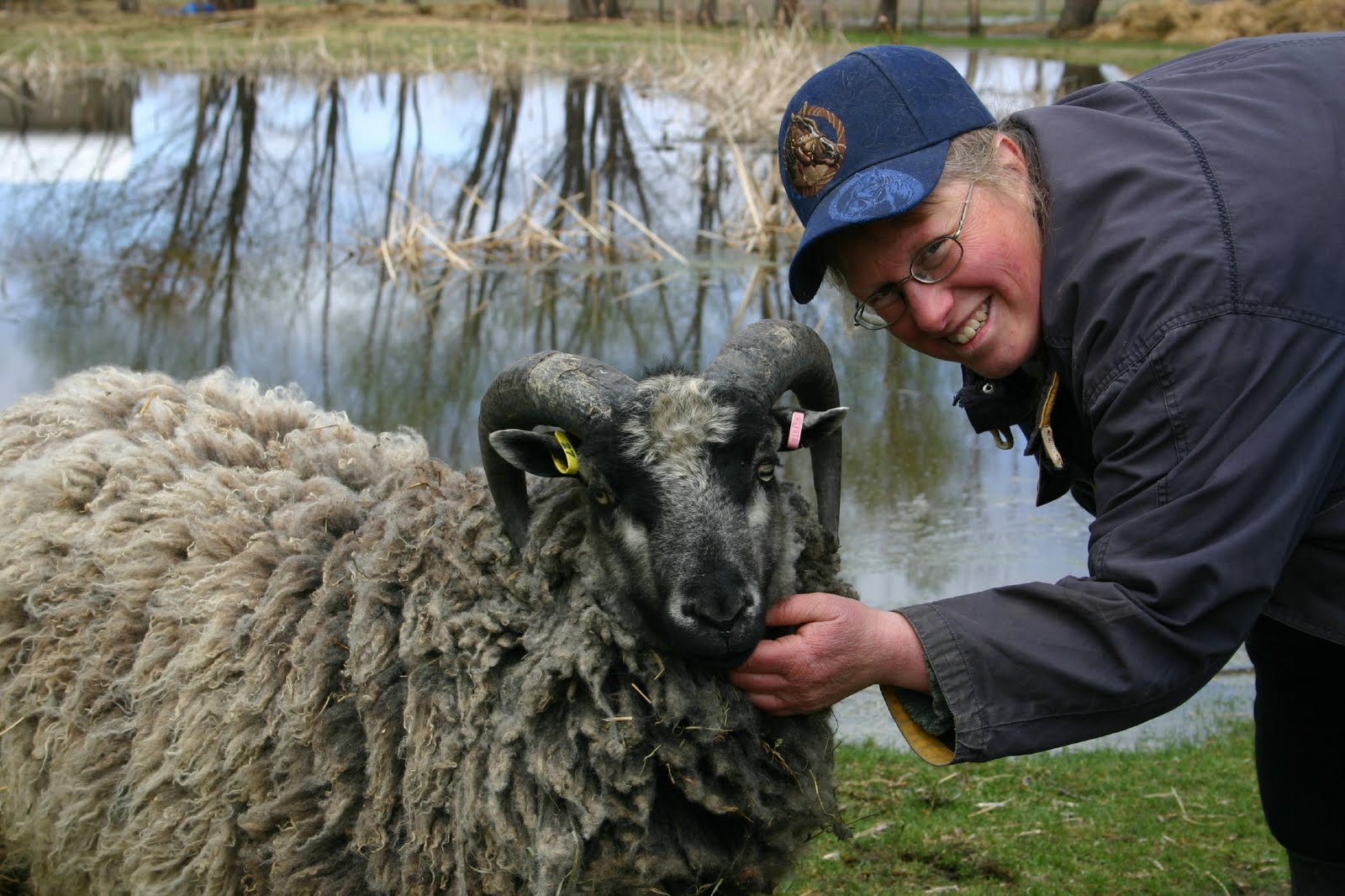
Cloverleaf Art and Fibre

We are now the one of the largest manufacturing bases of America and Europe.  Each studio is like a small factory.  Our demand for green supplies has brought a return to animal husbandry, indigenous plant crops, organic farming, and small mills.


Colin's Creatures

Here are some numbers:

            Top Ten Craft Segments by Sales
  1. Woodworking/Wood Crafts        $3.322 billion
  2. Drawing                                         $2.078 billion
  3. Food Crafting                                $2.001 billion
  4. Jewelry Making                             $1.446 billion
  5. Scrapbooking & Memory Crafts          $1.440 billion
  6. Floral Decorating                         $1.303 billion
  7. Crocheting                                    $1.062 billion
  8. Card Making                                 $1.040 billion
  9. Home Décor Crafts (Non-Sewing)         $948 million
  10. Wedding Crafts                                         $803 million

  • Vietnam:   Quantity. Vietnam has about 2790 craft villages of which over 20% of households participated in producing eleven major products groups such as lacquer, Porcelain, Embroidery, Bamboo and Rattan, Sea grass, Textile, Paper, Folk picture, Wood, Stone in the country
    Export value: According to statistics, the products export value of craft villages reached USD 273.700.000 in 2000; increased to more than USD 850.000.000 in 2008; and reached USD 900.000.000 in 2009 with 100 countries worldwide on the market.
  • Value of quilt industry in the US economy (2010):  3.58 billion  (Quilting in America)

Alison Yule Textiles


I could go on and on and find the numbers that show how important the art and craft industries are to our global economy.  Yet, we, as a group, are seen as insignificant and not taken seriously.  We are doing this for fun, because we don't want a "real" job, because we are weird or anti-establishment.  Most of us are "called" to this unrewarding work (in society's eyes).  We are compelled to do this. 

There is a weeding out process that happens when the young crafter begins experimenting, thinking that this might be a good way to live life.  Once they begin to seriously set themselves up for business, most drop out.  It is hard work.  Even with a degree, a tiny minority can find well-compensated work in an art or craft related field.  Those who stick with it, find themselves needing to learn all kinds of skills that have nothing to do with the real work they want to produce or sell.  They must become marketers, photographers, book keepers, and so on.

Kantara Crafts

The internet has completely revolutionized the marketing of crafts.  In the past, individuals and small businesses looked to galleries, craft fairs and trade shows for representation.  Now, everyone has the potential of creating a formidable presence online.  What?  The middle class is disappearing in the United States?  Well, maybe the new Russian elite might want to buy a weaving...  Websites and blogs have become increasingly user friendly.  Social media connects people from around the world.  In theory, this is the most democratic and revolutionary transformation business has had since the Industrial Revolution.  The reality is much different.


Deborah Grayson Studios

The serious craft business has enough on its plate with the business of product design and production.  For small operations, there is the often desperate attempt to get out there and see direct results through self-marketing.  It's an exhausting process in an ever-changing environment.

This is the key strategy behind TAFA's mission:  Markets for Members.  TAFA: The Textile and Fiber Art List intends to alleviate some of this by bringing the serious fiber artist and small textile business together.  It can help streamline the individual efforts into collective groups where members do not have to swim alone.  Yes, members still need to learn some of these skills if they want to effectively create a decent presence online.  But, they do not need to spend as much time on capturing an audience.  That is what TAFA hopes to do for them, to get out their and market the group as a whole to the various niches that can support them: galleries, interior decorators, boutiques, collectors, museum shops, and shoppers.


In order to do that, TAFA needs a new website, one that has all of the bells and whistles that will attract that kind of a crowd.  This will cost $5,000.  TAFA is currently a project of  Rayela Art, my business.  Even if we were structured as a non-profit, it is very hard to apply for funding for arts related projects in this climate of need.  There are so many natural disasters globally, victims of war, families losing homes, people in need of homes....  It is my firm belief that we should be able to raise this money from those who understand both our importance and our potential.

We are currently fundraising on IndieGoGo for these funds.  If you are financially able to support us in this way, we ask that you do so now, at this critical juncture.  TAFA now has 287 members representing 23 countries.  We intend on growing the membership into the thousands, becoming a hub for the whole textile and fiber arts community.  Help us get there.


Our members are offering gifts as a thank you for donations on this page: Click
But, the best perk we have is 18 months of advertising for $215.  
That is less than $12 a month! 

Once we reach our goal, it will still take three months for the design team to create the site.  Ads that are current when that happens, will transfer over to the new site.  Similar sites charge over $200 a week! 

Types of ads that would do well on our site:  health, bed and body, organic, spirituality, antiques, gardening, yoga supplies, other crafts, jewelry, and so on.  We are mostly women between the ages of 35 and 65, both in our membership and in our facebook demographics where we have 1,700 fans.

Of course, all donations are welcome.  Those who cannot donate can help by spreading the word.  We thank you from the bottom of our artsy craftsy hearts!

Please feel free to ask questions about TAFA, our strategy, or the new site here.  A dialogue on the economic impact of the art/craft industries would also be very interesting to me.  So, don't be shy!


Share/Bookmark

Sunday, November 15, 2009

Toms Shoes: Buy a Pair and They GIVE a Pair!


Need a new pair of shoes?  How about a comfy pair that will also serve a good cause?  Toms Shoes modeled their slippers on traditional alpagartas indigenous to South America.  The story goes like this:


In 2006 an American traveler, Blake Mycoskie, befriended children in Argentina and found they had no shoes to protect their feet. Wanting to help, he created TOMS Shoes, a company that would match every pair of shoes purchased with a pair of new shoes given to a child in need. One for One. Blake returned to Argentina with a group of family, friends and staff later that year with 10,000 pairs of shoes made possible by caring TOMS customers.

Since our beginning, TOMS has given over 150,000* pairs of shoes to children in need through the One for One model. Because of your support, TOMS plans to give over 300,000 pairs of shoes to children in need around the world in 2009.
Our ongoing community events and Shoe Drop Tours allow TOMS supporters and enthusiasts to be part of our One for One movement. Join us.

Blake talks about how the idea came to him:


Similar slippers have been standards throughout the world.  We know that they are comfortable.  Our feet like them!  And, not only is Toms helping barefoot people around the world get some basic, comfy shoes, the materials they use also help follow green practices.  They use recycled plastics and natural materials like hemp.


Toms shoes!  Attractive footwear with a social mission!
Visit their website to shop and learn more.


People like Blake give testimony to the difference one person can make when they commit themselves to address basic needs people have.  We cannot all make such a huge impact, yet we can all participate by sharing the good news and encouraging others to join in.  Blake can only make this impact because thousands of others have seen the vision and participated through their purchases, volunteer work and vocal support.  Kudos to all of you at Toms Shoes!


Toms Shoes is all over the place!  Find them on Facebook, Twitter, MySpace and YouTube.
Share/Bookmark

Wednesday, November 11, 2009

Afghan Hands: Fashion Meets Economic Development in Kabul


Afghan Hands, and embroidery project, 
works with women in Kabul and Jalalabad, Afghanistan.

A friend of mine sent me an email about a BBC challenge which will award $20.000 plus publicity to a group that shows innovation and economic development at a grass roots level.  One of the groups nominated for these awards is Afghan Hands, an embroidery project that works with women in Afghanistan:


Afghan Hands was started by Matin Maulawizada, native of Kabul who has found great success in the fashion world as a make-up artist and as a cosmetics science expert for Neutrogena.  As I clicked around the website and blog, I was struck that Matin is one of the rare souls who can gracefully breach this immense divide our world suffers between the rich and the poor, the educated and the illiterate, the wasteful and the hungry.  How many of us can truly walk between these two worlds and both retain a sense of dignity while embracing the humanity of such different social situations?  It appears that Matin has this gift.  His writing is humble and honest and his vision for the women in Afghanistan is both realistic and empathetic.  Here is how he describes the mission of Afghan Hands:

Afghan Hands teaches skills to help Afghan widows gain independence, literacy, and a livable wages. At our centers in and around Kabul, women learn to create embroidered shawls and scarves, and the exquisite embroidery they make connects them to a wider world.

The centers are places to gather, study, and work. We pay the women to attend classes in the morning and embroider in the afternoon. Without this project, they could not educate themselves. Through Afghan Hands, they leave the walls of their compounds and attend seminars on basic human, legal, and religious rights. They prepare for work as free women do elsewhere in the world. This way, no one will ever imprison them in the name of law, honor, or religion.

We are a nonprofit organization. We are also linked to the Mirmon Orphanage. Our mutual efforts keep expenses as low as possible so that the funds we raise go to women and children.

In the future, we hope to establish small parks and playgrounds for children who now live in areas devastated by wars, drought, and environmental damage. We envision green havens where words of encouragement and hope are shared.

For now, Afghan women, by their own hands, are transforming their lives. This is our mission. Thank you for your interest in them and in their one-of-a-kind handmade pieces.


The main product lines produced by these women are stunning embroidered shawls, both cotton and pashmina wool, many of which find inspiration in the Suzani motifs traditional in Uzbekistan.  The embroidery is impeccable.  The shawls range from around $150-$1000.  One of the things I really appreciate about the project is this choice to produce quality pieces instead of churning out chotchkies that might be more easily accessible to the general public, but which would not showcase the expertise these women have with their embroidery skills.  Projects like this do a great service to preserving traditional skills while providing the technical assistance to reach an audience that can support quality, handmade embroidery.  Here are a couple of samples that can be found on their website:


Pashmina embroidered shawls, available at Afghan Hands.


 Crinkled cotton shawl by Afghan Hands

Of course, what delighted me the most, was that the women are paid to both study in the morning and embroider in the afternoon.  I am a firm believer that education is the way out of poverty.  Women who can educate themselves have a much greater access to finding their voice in all areas of their life: socially, politically, and as full members of their family and social units.


 Women studying, Afghan Hands.


I often struggle with justifying my years of work in the handicraft field.  With so much hunger in the world, ecological disasters looming, and critical need on so many levels, I sometimes wonder why I spend my time and energy in marketing things that nobody really needs.  Yet, I find redemption over and over again when projects like Afghan Hands give testimony to the healing power these crafts have in the communities where they are made.  I believe that we need the physical beauty these crafts bring into our lives, the connection we can have with the people who made them.  But, the actual process of making things also serves as a therapy which can help rebuild the broken lives in war torn areas like Kabul.  People like Matin are the best peace ambassadors we can ask for.  They open the paths of communication between people who would never have had a connection otherwise.  The women purchasing the shawls learn about the women who made them, and the women who made them likewise expand their world views in learning about markets, design, and value.  Self-esteem grows.  We are no longer strangers to each other.

Visit Afghan Hands, support them in whatever way you can (they also accept donations), and vote for them in the BBC challenge.


All of the photos in this post belong to Afghan Hands and are on their website.
Share/Bookmark

Friday, September 11, 2009

Fruits of My Hands: Scissors in the Garden

Fruits of my garden.

I have to admit that my eyes sometimes roll around in my head when I go to a blog to look at textiles or art and all I see are the artist's flowers.... Well, this summer I had a bit of a conversion experience as I tackled my yard. I planted flowers and foliage, cleared a plot of land for a vegetable garden and labored to fight invasive vines, grasses, and weeds. I pulled, yanked, tilled, watered, seeded, and did my best to coax a yard which had been neglected for decades into something productive. Every bug in the book came to feast and then weird spots and molds showed up on my precious babies...

My baby veggies, so eager to live!

When you nurture something from a seed, there is a great source of pride and fascination to see it grow into a plant, especially if it also feeds you. At least, this is true for me. I have always had a few potted plants, but had never really tried to be the backyard gardener. I figured farming was in my blood and it should come naturally. Ha! I planted everything too close and had no idea that a tomato plant could grow to be over six feet tall. My friend, Tom, is the director of Angelic Organic's Learning Center. I called him for help and he recommended that I read John Jeavon's book, How to Grow More Vegetables (and fruits, nuts, berries, grains and other crops).


What a great resource! Of course, I had done everything wrong, but there was still time to correct some of the mistakes. The soil was nitrogen poor so I added some organic fertilizer and started a compost pile.

Garden plot in June 2009

Some things grew very well, while others got eaten up by bugs or a pest. I had the best luck with tomatoes, zucchini, peppers, cucumbers, and pumpkins. Oh, and I got lots of wonderful basil!

Garden plot in August 2009

The sweet peas dried up with the heat of summer, the lettuce shoots up into large stalks, I did get some green beans, but then a worm got on to them, and forget the broccoli! My goodness, did that get infested! Jeavons and other authors in books I checked out from the library, all talked about what can feast on your precious plants. But, the worst of all are snails and slugs. Jeavons described how they go slug hunting at night, so I figured I should go out one night with a flashlight and take a look. The slugs were everywhere! It revolted me so much that I was almost sick! I had nightmares from them, big, fat, slithering monsters invading my veggies and chomping away. How disgusting! I tried the salting and that was too horrific to endure, plus it is not good for the soil. So, I bought pellets, similar to "Sluggo" which are approved by organic gardeners. The slugs eat them and dry up in a few days. But, one slug can lay 300 eggs, so it's a long process, especially if your neighbors are indifferent to what lives outside their doors.

My cucumbers, zucchini and green beans.

It has been fascinating to go outside and decide what I am going to eat that day based on my little harvest! I feel sad to see that Fall is upon us and that soon I won't have these delicacies. My respect for my peer artist friends who also garden has grown. I was just in Chicago visiting friends and a few of them had some gorgeous gardens, all of which renew the spirit and provide beauty to the eye. My friend, Roberta, is a ceramic artist and her garden is adorned by sculptural pieces.

Roberta de Oliveira's garden in Chicago.

Chris and Joyce won a neighborhood award for their garden. Their goal was to do away completely with grass and the result is a lovely mix of flowers and veggies.

Chris an Joyce's garden in Skokie.

The most surprising garden I was across the street from my husband's apartment. He lives in a densely populated urban area on Chicago's north side. A couple of Vietnamese women have taken up a bunch of the grass areas and planted vegetables. Apparently, they are out there every day, bent over their plants, and they share the produce with whoever wants it.

Vietnamese women gardening in Chicago.

Chicago has made a commitment to become the greenest city in the United States and has even established a successful green roof program, so I guess I should not be surprised to see any plot of available earth being used to grow food.

However, there has been a consequence in my ability to produce another fruit: I have only touched my scissors to cut off veggies and bad leaves, no fabric! This is the age-old pattern of the farmer/crafter. Food is the priority in the summer months and the time for waiting becomes dedicated to production of functional goods. For centuries, people have worked the soil and then used the winter months for projects which can be done inside the home.

One of my favorite photographers on Flickr, Baba Steve, has caught many of the vendors from around the world. These places also produce many of my favorite crafts!


In fact, the production of handicrafts and farming are recognized as partner industries by most development organizations. The Peace Corps has combined the two in their strategies for decades. They were the ones that brought Scandinavian sweater knitting patterns and techniques to the indigenous Quechua of Otavalo in the 1960's. This has grown into a multi-million dollar industry with traditionally dressed Otavalo Indians selling sweaters in markets all over the world. (See some consequences.) Oxfam International works with similar groups in Asia, Latin America and Africa. The United Nations reports on how poverty is especially dire in rural areas and how the internet has become the new tool to bring income into these distressed areas.


Does that sound familiar? Am I not doing the same thing? I live in a small town in Kentucky where job opportunities are limited. My income is mostly generated by my online stores. A friend of mine from Ghana told me how now business is all done on cell phones, both by farmers and handicraft traders. Having the ability to live where you grow your food and make your craft also has deep implications in how societies are able to structure their family units, preserve their traditions and maintain ownership over their land, a problem that USAID identifies for many struggling communities who live in rural or forested areas.

No, I will not roll my eyes anymore at other bloggers who garden and love their flowers. Whether our scissors are inside, cutting some fabric or thread, or outside, harvesting some fruits, we are all part of this wonderful tapestry that makes Earth a better place to live!

Making some earth...


*
Share/Bookmark

Wednesday, July 22, 2009

What is an Artisan? The Story from Maker to Market (Aid to Artisans)


Aid to Artisans works with producer groups around the world. They are an excellent organization with a hefty track record. Here is their description of what they do:

We create economic opportunities for artisan groups around the world where livelihoods, communities, and craft traditions are marginal or at risk.

We blend a passion for the deep-rooted cultures and handmade traditions of the developing world with a commitment to building profitable businesses. Environmentally sound practices are at the foundation of our methodology. We recognize that we can only bring lasting economic growth if we provide an integrated approach to product development, business skills training, market access and eco-effective processes.

We accomplish this by working together with partners in the countries where we work and in the markets we connect artisans with, leaving behind an infrastructure that continues to support the artisan community long after we complete our mentoring.

This video reminds us that every product that reaches the market has passed through many stages and many hands, each with their own set of demanding tasks. Visit Aid to Artisans to lean more about all of the technical assistance they provide and for information on the many groups they work with around the world.
Share/Bookmark

Saturday, April 4, 2009

Chiapas: A Revolution, Some Sheep, and Centuries of Weaving

From Arthur Frederick Community Builders, an organization dedicated to small-scale community development. They have projects in Chiapas.


A decade ago, Chiapas was in the news alot. Not for the abundance of craft production that goes on there, but because of the charismatic leader, El Subcomandante Marcos, the masked poet revolutionary who speaks for the poor in Mexico's most neglected state. I hadn't heard anything in a long time from that part of the world, so I decided to do some internet surfing. Sure, there is plenty, but much of it is over two years old, has broken links, or focuses on coffee production. Chiapas borders Guatemala and the Mayan descendants who live there are experts in many craft techniques. I focus in on the textiles because that is what I do: look for threads! The lack of current information surprised me, but given that other parts of the world are in even more desperate blood baths, perhaps interest has dwindled recently.

To put you in the fiber context, here are a couple of examples of traditional Mayan huipils (woven blouses) from Sna Jolobil, a non-profit working with indigenous women in Chiapas for over thirty years:

Galley image from Sna Jolobil, woven brocade huipil.


Galley image from Sna Jolobil, embroidered brocade huipil.

If you are familiar with Guatemalan textiles, you will see how close they are in style. Although Chiapas has many different non-Spanish speaking Indigenous groups, most descend from the Maya and thus have similar customs.


The largest of these groups is Tzotzil, agrarian and sheep herders by tradition. Unesco has an extensive description of the importance of sheep to these people. Wool products account for 36% of the family's income, completely in the domain of the women. The wool from this area is thick, long and rich, easily recognizable once you have seen it and felt it. Sheep are not eaten, in fact, they are considered sacred, as soul mates. Here is a snippet from Grain which carried an interesting article about the importance of these sheep:

"First of all, sheep are part of the culture of the Tzotzils; since they are sacred animals protected by the local religion, it is forbidden to hurt, to kill or to eat them. Secondly, they are also the exclusive responsibility of women, who take every decision over any issue related to these animals and also keep and manage any money derived from their sheep. The Tzotzils believe that every person has an ‘animal companion’ who suffers the same fate as his or her soul mate. When a person is ill or dies so does his or her animal companion. Even when most animal companions are wild animals, it is recognised that sheep can be the secondary soul mates of shamans and healers, and this is the reason for not hurting or killing them. However, it is only sheep that are sacred, and cows, horses or pigs are just domestic animals for the Tzotzils, who raise them, kill them, eat them, or sell them as needed.

The importance of sheep is related to the traditional clothing of the Tzotzils. Clothes for ceremonial or daily use are made out of wool and any visitor to the villages or to the local markets will find men in their heavy black coats or their sleeveless white jackets. Women wear their black woollen skirts and their richly embroidered brown blouses, and they cover themselves with black shawls. Children’s clothes, blankets and bedspreads are woven to blend fleeces of different colours, to create an infinite number of grey and brown shades. These woollen clothes are quite heavy and a hairy finish is highly regarded; they are also waterproof and last a very long time: two or three years of daily use."


Mujeres de Maiz Opportunity Foundation update on weavers and their sheep in Chiapas.

Unfortunately, even though Chiapas is one of the wealthiest states in Mexico in terms of natural resources, the people who live there see little benefit. Hydroelectric power generated in Chiapas powers much of Mexico City. Instead, they are among the poorest of the poor in Mexico. Chris Arsenault wrote an essay in 2005, reflecting on the then ten-year old resistance movement that had sprung up in Chiapas:

"70 percent of Chiapas's dwellings are overcrowded, 51 percent have earthen floors and more than 35 percent lack drainage or electricity, even though Chiapas produces 60 percent of the hydro electric power used in Mexico City. These objective realities, along with 500 years of cultural destruction and humiliation for Mexico's (and Canada's) indigenous, created the conditions for rebellion."

The revolt was led by El Subcomandante Marcos, a figure who, like Che Guevara, has captured the romantic dreams of the oppressed and turned them into poetic action. Although we never see his face, he speaks with a directness that is infectuous. How can he not be the most beautiful man under that mask?


Wikipedia has an interesting story on who this Marcos might be, so hop on over if you want to know more (AFTER you finish with my story!!!!)


In the same article, Arsenault attributes the growth of women's textile cooperatives to the rebellion without mentioning that many other non-governmental and non-profit organizations have been in the area for decades. I did not see any clear evidence in my surfing that the handsome masked man has greatly improved the conditions of the poor in Chiapas. Instead, I did see that Lucia and Ernestina, in the photo on the left, and others like them, have benefitted from these other organizations who have helped them improve their farming techniques, given them access to larger markets and to financial opportunity through micro-credit approaches. The video below is one such example:


I consider myself a pacifist (or, maybe I am just a coward). I have absolutely no idea if I would remain such if I had been born into a society where my life chances were so minimal, but I like to think that economic development is a much better way to go than through violence. And, I also will support any effort where communities can engage in handicraft and textile production in order to better their lives. This, I will do to the end of my days. With some access to credit, a hard working woman can buy some land. She can feed her children and have her sheep soul mates. Clinics and schools and infrastructure will come as they pool their resources. Above all, she will have her dignity.

Visit my other blog, Artezano Links for more resources on the handicrafts in Chiapas.
Share/Bookmark

LinkWithin

Related Posts with Thumbnails