TAFA: The Textile and Fiber Art List

Showing posts with label Vietnam. Show all posts

Tuesday, April 17, 2012

Book Review: "The Ideal Man" by Joshua Kurlantzick

The Tragedy of Jim Thompson and the American Way of War


Jim Thompson earned the title of "The Silk King" in Thailand, back in the 1950's.  One of the first Westerners to appreciate Thai Silk, he had a vision to transform the life of poor weavers, giving them ownership over their production and exporting their silks to the United States and Europe.

He was also a spy.  In fact, he ended up in Thailand as one of the CIA's first batch of suave James Bond types, fell in love with the country and stayed.  He had studied architecture and design and truly loved the old Thai way of life.

Then he disappeared.  The story had intrigued me for years, but I had never really gone beyond the surface details.  His name came up again as I wrote a post for TAFA's blog , "S is for Silk".  I had seen a novel about him in a bookstore, a mystery written with a possible scenario of how he vanished, so I decided to see if my local library had it.  Instead, I found this one, "The Ideal Man", and am glad I did.

As the subtitle states, Jim Thompson's tragedy is tightly linked with how the United States developed its presence in Asia.  The tragedy goes beyond the disappearance.  Thompson's whole life became tragic as he fell in love with this country, created a voice for the common people, and increasingly lost faith in the American role in Asia.  When he arrived in Thailand, there was a vibrant democratic movement happening in the region.  Within a few years, both the Royals and the United States helped ensure that these anti-colonial voices were squashed.  Instead, the usual corrupt dictatorship was endorsed and led to power.  We all know what the consequences were for Vietnam.  Much less is told about Laos and the devastation we left there.  Thompson's political position was in favor of working with the rebels in all three countries.  He met with them, knew them as friends and had a vision for self-government that was way ahead of his time.  He watched his friends become imprisoned, then shot, and he himself lost favor with both the Thai Royals and the U.S. government.  The ideal man had ideals.  They were trampled on, breaking his spirit and his vision for the region.

The book mostly covers the political intrigue that happened around Jim Thompson over a period of twenty years.  It names the characters that played the main roles in deciding Thailand's future.  It also describes Thompson's life, how he collected and preserved thousands of artifacts, keeping them in his home until he would one day make them available to the Thai people in a museum.  

Jim Thompson's house.

Even his house was one of these artifacts.  He had two traditional peasant homes dismantled and reassembled in Bangkok, starting a fad among the elite to copy him and preserve traditional Thai architectural elements in an environment that was quickly modernizing into Western influences.  At the same time, he built the Thai silk industry into the giant that it is today.  He entertained the most famous people of the day in his peasant houses: presidents, film stars, political leaders, and wealthy tourists who had begun to explore Asia.  Towards the end, the book describes Thompson as worn out, a man with a broken heart and no hope for the future.  Ironically, his disappearance ensured the preservation of his life work.  The house is now a museum and the silk business continues as a profitable venture.

Jim Thompson goes on a trip, a vacation, in Malaysia to visit some friends on an estate.  This was March 27th, 1967.  He goes for a walk and never comes back.  There are woods on the estate and several searches funded by different parties look for any little clue that might lead to an explanation of what happened.  Detectives are hired.  For years, various groups grasp at possible leads.  Nothing is ever found. Nobody knows what happened to him.  Could he have walked out into a new life?  Unlikely.  Did anyone want him dead?  Yes.  It would have been a relief to the CIA, to the Thai Royals and to his silk competitors to have him gone.  His political positions were embarrassing to the US and the Thai elite despised him.  A tragedy, indeed.

Cameron Highlands, Malaysia, where Jim Thompson disappeared.

This story is so familiar to me.  I grew up in Brazil during a time when there was great civil unrest (1970's).  Students were disappearing by the thousands.  Dissidents were imprisoned, tortured and killed.  As a teenager, an American abroad, I was told, in whispers, to always say that Brazil was a democracy.  Later, in college, I learned about the CIA's role there, about the School of the Americas, of how Latin American dictators were puppets, held in place by the US government.  Of course, none of these stories are simple, black and white moments.  They evolved out of many legitimate fears coupled with greed and the desire for power.

Now, both South America and Asia have become strong economic powers on their own terms.  We see an economic decline in the United States that rocks our way of life, our sense of entitlement.  Brazilians flock Disneyworld and fly up to Miami to shop.  Thailand is party land, a center for easy drugs and prostitutes.  The lesson for me is that what we do is important.

My portal to many countries is usually through their textiles and crafts.  Jim Thompson's story resonates with me because of this connection and because of his understanding of how economic development can happen through handicraft production and through the arts.  He was about fair trade before the term was even coined.  And, his story rings a bell because of the expat connection.  When I was a kid, almost every house in Brazil had a picture of JFK hanging next to Jesus with his bleeding heart.  Being an American back then was like being nobility.  I learned early on that some kids wanted to be my friend because I was an American.  Some were curious, some wanted "stuff".  Now, being an American is considered cancerous and downright dangerous in many countries.  This has not happened overnight.  It's decades and even centuries of abuse on our end.  This is truly the great American tragedy.  With our way of war, we have lost our friends.

Everything we do has political and economic consequences.  What we buy, what we eat, where we walk, drive or fly.  And, this is what drives my passion behind my love for all things handmade:  We can be simple so that we can simply live.  In peace, with one another.

Jim Thompson with weavers.


Resources:

Jim Thompson Website
The Jim Thompson House

TAFA Members Working in Thailand:


TAMMACHAT Natural Textiles
Unique Batik Fair Trade
Luxury Lanna Crafts
Siamese Dream Design


Share/Bookmark

Tuesday, June 10, 2008

Politics in the World of Fiber

I have been reading Obama's books, given to me by my Auntie Nyla. I finished "Dreams from My Father" and am about half way through "The Audacity of Hope". I would have voted for him even before reading the books, but now I feel even better about him. Only six months older than me, much of his experience as an organizer in Chicago coincided with the work I was doing at the same time in social service. While he worked in Black neighborhoods, I was mostly on the North side working with Latinos and mixed populations.

I also identify closely with his search for identity, growing up in such a mixed and multicultural environment. I was raised in Brazil (1962-1980), mostly in Maringa, Parana, a pre-planned city that grew out of new immigrants and settlers. My parents were Lutheran missionaries to a German congregation, my best friend was Japanese, another friend down the street was from Lebanon, my brother's best friend was of Italian descent, and many of our friends descended from African slaves mixed with Dutch colonialists, French, and so on. I was always perceived as an American. Then, when returning to the United States and going straight into a white, Lutheran school, St. Olaf College, where almost everyone looked like me, I experienced a terrific culture shock. My natural disposition connected me like a magnet to the other international or foreign students. Over the years, I continued to feel more comfortable with people who had either spent time overseas or who were from other countries. My father told me as a teenager, "You will be able to live anywhere, but will never be at home anywhere." How visionary of him!

Now, living in the South, it is almost like being in another country, or at least it feels more similar to the Brazil I grew up in. Time moves more slowly, values of friendship and family continue to have priority as compared to the constant rush of the city. Thinking about all of this, has brought back images of art, political debate, culture, and dissent that has had an impact on me in the past. I thought I would reflect a bit on this for today's post.

From Wikipedia:

Politics is the process by which groups of people make decisions. The term is generally applied to behavior within civil governments, but politics has been observed in all human group interactions, including corporate, academic, and religious institutions. Politics consists of "social relations involving authority or power"[1] and refers to the regulation of a political unit, [2] and to the methods and tactics used to formulate and apply policy.[3]

From Artworld Salon, article on dissent.

So, art relating to politics usually gets our attention when it comes in the form of dissent or protest. Several famous people and political leaders have declared dissent as a core pillar of democracy:

Evelyn Beatrice Hall: I disapprove of what you say, but I will defend to the death your right to say it. (paraphrasing Voltaire)
George Orwell: In a time of universal deceit, telling the truth becomes a revolutionary act.
Harry S Truman: Once a government is committed to the principle of silencing the voice of opposition, it has only one way to go, and that is down the path of increasingly repressive measures, until it becomes a source of terror to all its citizens and creates a country where everyone lives in fear.
John F. Kennedy: Without debate, without criticism, no administration and no country can succeed -- and no republic can survive.
Martin Luther King Jr.: Human salvation lies in the hands of the creatively maladjusted.
Mohandas K. Gandhi: Non-cooperation is a measure of discipline and sacrifice, and it demands respect for the opposite views.

Words have always had a powerful effect on my thinking. I remember very few of them, but retain the impact of what I read, if that makes any sense at all. I do remember some t-shirts and posters that were big twenty years ago:

  • We are the strangers our mothers warned us against.
  • Join the army. Travel to exotic places, meet interesting people and then kill them.
  • Nuke the gay whales for Jesus.
Syracuse Cultural Workers is one of the long-time suppliers of posters, t-shirts, buttons, and popular dissent tools for activists in issues concerning social justice. Here are some of their posters:


Che Guevara was one of our heroes when I was growing up in Brazil. Just the image of his face was enough to convey a whole system of thought. Thus, images have even more potential for moving people out of complacency into action.

What I am showing here is pretty tame compared to what is out there. Sometimes, a message can backfire when it is so in-your-face that the viewer becomes turned off and shuts down whatever feeling of empathy might have been had. I think this can happen with images of extreme hunger or war. Humor often works really well for me. Monty Python's "In Search of the Holy Grail" is loaded with wonderful jabs at society. This little piece finds King Arthur in an argument with a peasant. It's even subtitled!


My favorite political satire site, Jib Jab, can be pretty raunchy sometimes, but I think they nail the big issues of the day on the head. Here's one from their site:


It's interesting to look at some of their older ones and realize how quickly much of what is debated in the public arena becomes obsolete so quickly. This is certainly a challenge when an artist decides to address political ideas through his or her work. In examining and recording the decision-making process between those who have power and those who don't, artists interpret history and society from their own unique perspective. Fiber mediums, especially, demand both an enormous time commitment and a viewing platform that are more accessible to other art forms. Historically, the elite have had access to the materials and the time to either execute or commission tapestries, weavings, embroidery, or other fiber work that recorded political events, thus also controlling the message of the piece. This video of the Bayeux Tapestry has been animated and edited to show some action, but look at the size of this thing! 230 feet long! The poor king loses his head in the end...


The Bayeux Tapestry (French: Tapisserie de Bayeux) is a 50 cm by 70 m (20 in by 230 ft) long embroidered cloth which explains the events leading up to the 1066 Norman invasion of England as well as the events of the invasion itself. The Tapestry is annotated in Latin. It is presently exhibited in a special museum in Bayeux, Normandy, France. (Wikipedia)

There is also the ephemeral quality of fiber art. Perhaps there were more reactive pieces that have not survived the passages of time. In more recent history, we have documentation of fiber artists who have told their own stories from their perspective, given coded messages, or profited from political movements. Quilts played an important role during slavery, giving hidden messages to runaways about whether a house was safe on the underground railroad or how to proceed from there.
After the Vietnam War, the Hmong recorded their escape through embroidered Story Cloths. The soldiers, in this case, are good guys, helping them out of harm's way.

Baluchi rug makers began making war rugs to celebrate the defeat of the Russian invasion in the 1970's. These became so popular and collectible, that they now make 9/11 rugs and war rugs with a US theme, some pro, some against, and some just for the sure sale to soldiers and tourists.

Political symbolism comes and goes. The images and text that endure are ones that hit upon universal truths. Obama speaks in his books about the complexity of issues and the difficulty of problem resolution facing our times. His challenge to us all is to build on common ground. It will be interesting to see, if he wins, whether he can take the rhetoric and move it toward workable policies.

Meanwhile, I am especially inspired by artists who address our political problems by offering visions of hope. Hollis Chatelain is one such quilter. I have seen several of her pieces here at the Quilt Museum, and was especially enamored by her huge Tuareg portraits. She uses thread as her color palette, filling up space with machine quilting which can only truly be appreciated when viewing in real life. Many of her quilts are social commentaries, inspiring us towards unity and conservation of resources.

"In February 2002, I dreamed “Hope For our World”. The dream was in purple and Archbishop Tutu was standing in a field. Children from all over the world were approaching him like he was a Pied Piper. The dream seemed to be speaking about World Peace and the Future of our Children. Desmond Tutu represented Hope." Hollis Chatelain

I would love to hear back from the rest of you on what you think the role of art is concerning politics. One article I read about textiles and politics awhile back stated that the general preference is to create "nice" work- flowers, color, pretty scenery, things that don't rock the boat. I like beauty as well as the next person, but I know that when I walk through the Quilt show, the stoppers for me are images that speak about something in a new way. So, is there a place for you in the world of political fiber?
Share/Bookmark

Monday, June 2, 2008

Eco Housing: Baskets So Big You Can Live In Them!

Have you ever seen a basket so beautiful that you wish you could blow it up to a much bigger size, magnify it, step into it and live in it? Well, there are traditional dwellings around the world that have lived out this concept, using the natural fiber materials found in their environment to build simple to elaborate living structures. Bamboo, wood, straw, banana leaf, grasses and many other renewable materials take the basic concept in assembling a basket to that larger dimension.

In 1973, a book called Shelter was one of the first to document dwellings from around the world in one place. It is still available through Shelter Publications, which has since published a couple of other publications on the same theme. The book has over 1,000 images of yurts, huts, tents, domes, tree houses and other dwellings in their traditional environment or inspired by native cultures. The book inspired me to get others like it and to think of living spaces in a new way.

Urban and suburban sprawl in the United States have been swirling out of control for the last fifteen years. McMansions behind bars in gated communities promise isolation from crime, other undesirable outside influences, manicured lawns, uniformity, and above all, distance from nature.

Where would you rather live? Here?

A gated community in Ontario, Canada.

Or, here?

A Toraja House in Indonesia

Now there is a huge housing crisis with millions facing foreclosure, displacement, and financial ruin. The increasing cost of oil has also put a stopper into the car culture, the desire for the biggest monster on wheels possible. How many of us really need a hummer? Without downplaying the real pain many families are facing in the loss of their homes, jobs, and access to transportation, this crisis is helping give green construction and transportation businesses the boost they needed to enter mainstream markets.

Several years ago I knew I was fed up with life in Chicago. I longed to be closer to nature, my business was not doing well (retail store selling handicrafts), the cost of living was enormous, and I just wanted out. I started thinking about maybe having a bed and breakfast somewhere with a cultural theme. I knew I wanted to be somewhere in the SouthEast and started researching bed and breakfasts in that area. Everything was Victorian or cute country. Then I found some green businesses, mostly in Florida. New Mexico, California and other Western states had a ton of wonderful spas and green hospitality places with interesting architecture and commitments towards sustainability and low impact living. Sigh... All these wonderful experiments going on all over the country... but, they all need capital and acceptability from the public.

One day, I sat back and had this wonderful vision of a place I would love to be a part of. I saw this villa unfold in front of me, full of the craftsmanship I so love, people from all over the world, a place of teaching and of recovery from the city. I wrote it down, researched it, and called it the Peace Villa. I didn't pursue it, but kept it up on my website, just in case someday it would come off the shelf.

Since that time, similar ideas have been pursued by others, both in terms of personal housing and for recreational purposes. Simon Dale built a house in Wales for his family, what I consider the ultimate dream of living in a big basket.

Simon gave me permission to use his photos and text from his website, so I have a bit below.

"It was built by myself and my father in law with help from passers by and visiting friends. 4 months after starting we were moved in and cosy. I estimate 1000-1500 man hours and £3000 put in to this point. Not really so much in house buying terms (roughly £60/sq m excluding labour).

The house was built with maximum regard for the environment and by reciprocation gives us a unique opportunity to live close to nature. Being your own (have a go) architect is a lot of fun and allows you to create and enjoy something which is part of yourself and the land rather than, at worst, a mass produced box designed for maximum profit and convenience of the construction industry. Building from natural materials does away with producers profits and the cocktail of carcinogenic poisons that fill most modern buildings."

The house is much lighter and bigger on the inside than I expected:


Simon has many more photos and instructions for how to build a similar structure on his site. But, see! Isn't it just a big basket?

This is not a new idea. Variations on this can be found all over the world from time immemorial. Here is a photo, now on public domain, of a wooden yurt from Russia:

Mongul Travel sells gorgeous fabric yurts for under $4,000:


Isn't this just gorgeous? So, here you can live in a basket, covered with your favorite textile! And, look at how bright and sunny the inside is:

Many may think that living in a traditional dwelling like the ones I'm showing here, means living in discomfort, without bathrooms or other amenities, but there are many green construction businesses out there that are adapting these traditional building methods to modern needs or expectations. Bamboo is a wonderful renewable material that has lately been used in many new ways. We now have bamboo fibers that knitters, weavers and quilters can use in their work, and the construction business generates gorgeous flooring and pre-fabbed panels that offer both a durable and healthy option to the often poisonous mainstream materials. Here's a nice little video showing the construction of a bamboo house using pre-fabbed panels:


Your basket house does not have to be rustic and ethnic looking. You know the slick lacquerware found in Thailand and VietNam? Here's an example from Green Tulip Ethical Gifts:

Those who like a sleek, modern look can have it, too! Building Green has a bamboo model house designed by Danish architect, Soren Korsgaard:

If you can't or don't want to build your own basket house, consider staying in one for your next vacation. Many of the sites mentioned in this article have good links that can give you more information on other projects or resources. Again in Wales, Cae Mabon, offers such a retreat with wonderful structures like this one throughout the resort:


Heifer International
, a wonderful food aid program based here in the United States, works worldwide to alleviate hunger. They have several learning programs for adults and teen-agers and are soon opening the Hidden Villa in California:

"The ten acre campus will be located at Hidden Villa, a nonprofit environmental education center in Los Altos Hills, California (18 miles west of San Jose). Since 1945, Hidden Villa has provided learning opportunities to inspire a sustainable future."

Not only are these basket houses interesting architecturally, but they also step lightly on the earth and save resources. If built correctly, they can help us save energy, reduce our dependency on oil, and decrease the use of toxic materials. My friend, Tom Spaulding, of Angelic Organics Learning Center, recently built a new building which houses their offices and training workshops. They used straw bale building methods with naturally harvested woods for supports, creating a gorgeous structure. This is in Beloit, Wisconsin where winters are miserable and long. The building was so warm, they often wore shorts during the winter! Imagine! No heating bills in the bitter MidWest!

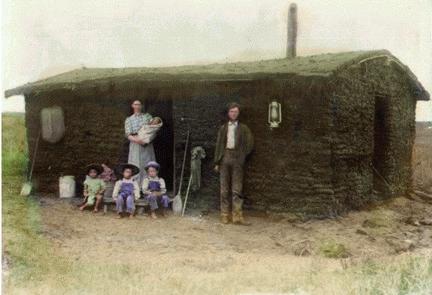
The challenge and delight for all of us is to use these ancient ideas that have worked for our ancestors and apply them in big or small ways to our immediate environment. It's not always easy as city ordinances and neighbors may balk at what looks different from what they are used to. It takes education and successful examples to make inroads into entrenched ideas of what is acceptable for our neighborhoods and communities. But, we are not talking about the sod houses of yesteryear. Instead, we have beautiful, solid structural options today that can use these fibers to the full capacity of our imagination and technology. Take it to the next level!

Sod House in Nebraska

Share/Bookmark

Friday, May 30, 2008

HeART of Healing Gallery, A Place of Peace in Paducah

This past weekend I had the privilege of working at HeART of Healing Gallery, located in Paducah's art district, Lowertown. The gallery is the creative healing extension of Integrative Medicine of Kentucky, Dr. Christi Bond's clinic of alternative health.

Mission Statement

photo
Our primary goal is for each patient to enjoy optimal health through a combination of safe, innovative, and natural treatments. Integrative Medicine of Kentucky combines natural therapies with appropriate conventional medical treatments in a safe manner. We treat the person as a whole being, addressing imbalances on physical, emotional, mental and spiritual levels. Our treatment plans require time, patience and the commitment to change formerly harmful, destructive habits.


Dr. Bonds and I both belong to Paducah Fiber Artists, an informal group that meets monthly to share progress on our projects and critique each other's work. We both love ethnic textiles and carry some similar inventory (molas, kimono, and hilltribe textiles), but that doesn't stop us from trading or collaborating.

The gallery showcases those textiles plus work by local artists.

Although the space is not huge, it is well divided into themes that change as new inventory arrives and focus needs arise. Dr. Bonds is well-stocked with vintage kimono. Quilters buy these to cut them up and incorporate them into their own work, but they are so beautiful that many people just buy them to wear or display as a textile.


A current exhibit of photos supports an orphanage in Vietnam. The photographer is dating one of Paducah's native sons and both have spent time volunteering at the orphanage.

Another exhibit showcases local artist Nikki Mae's pen and ink drawings, framed in black below the large scripted piece:

Gorgeous Tibetan singing bowls fill a cabinet, the beginning of a collection of instruments which will be used in sound therapy.


Quan Yin and other female imagery are found throughout the gallery and clinic, both in paintings and carvings.


But, my new favorite are the mola blouses! I had never seen them before, except in photos and am amazed at how beautiful they are.


I have my eye on this one, so DON'T buy it! It's Jesus on a cross, but he is smiling, boogey-eyed, and looks really friendly and sweet.

Dr. Bonds has a huge mola collection and just took down an exhibit that focused on Christian imagery in mola art. I had not been exposed to those before either. I had always seen the birds, abstracts, and animals and have many of those for sale in my Etsy store. I bought one from Dr. Bonds that shows the story of Jesus and the woman at the well, a sermon my Dad had preached on many times over the years and used again in his retirement sermon, just recently.

I had some henna clients at the gallery. One of the wonderful things about being at HeART of Healing is that all the people I have met there are SO nice! This is Eleanor from Nashville, who visits Paducah and Lowertown frequently. She was a futon maker until just recently.


The clinic and gallery are housed in the same building, on the corner of 7th and Monroe. The clinic is as interesting as the gallery with each room decorated in gorgeous hand-crafted furniture, textiles, and objects from around the world. There are three themed acupuncture rooms: Native American, Quan Yin and Egypt. Soothing music is everywhere.

I am not just a friend, a co-textile lover, a trader, or an occasional worker. I am also a patient. I've gained 20 pounds since I tore my meniscus in my knee almost two years ago, have felt lethargic and must stop smoking. So, Dr. Bonds is helping me get my old self in order through herbs, acupuncture, chocolate (!!!), and support. She considers her East/West approach as her tool bag, and will pull out whichever tools she needs from either tradition to address the problem. I am so happy to have her expertise here and hope that both the gallery and clinic grow into a thriving practice for Dr. Bonds who recently relocated here from Nevada.

HeART of Healing Gallery is in the process of having an online presence where items will be available for purchase. Check the Integrative Medicine of Kentucky site for updates. And, if you visit Paducah, make sure to stop by for a visit! Currently, the gallery is only open on Saturdays, but those hours will expand in the near future.
Share/Bookmark

LinkWithin

Related Posts with Thumbnails