TAFA: The Textile and Fiber Art List

Showing posts with label Wisconsin Artist. Show all posts

Wednesday, August 25, 2010

TAFA Members Talk: Helen Klebesadel, "I Love Quilts"

 
"Crazy Quilt" by Helen Klebesadel, watercolor, 30 x 20


I love traditional arts, and in particular those fiber arts associate with women’s traditional roles.  Many of my large-scale watercolors celebrate the crochet work and quilting that were the creative work of the women I grew up around in rural Wisconsin.  In my paintings the hand work of women is not represented as part of the background, but are instead the point of the paintings.

As a child I was taught to sew, tat, knit, crochet and quilt.  My earliest memory of an artist at work is my great grandmother embroidering a fantastic crazy quilt and crocheting amazing bedspreads, but I was not taught to think of her as an artist or her fabulous creations as art until much later when I studied and became a part of the feminist art movement. As a returning adult student I was lucky enough to study and teach women’s studies as I worked toward my MFA. 

As a professor of art and women’s and gender studies I have long made traditional and cross cultural approaches to art a key part of my teaching and I have incorporated critiques into my core curriculum that examine the exclusion of particular arts associated with women, working class, and culturally diverse people.  Now, the day job I have, that supports my art habit, is Director of the Women’s Studies Consortium of the University of Wisconsin System, and I look for opportunities to keep the arts a core part of the women’s studies movement.


"Altared" by Helen Klebesadel, watercolor, 20 x 30


The paintings of quilts are my most extensive series to date.  I have titled the series "Everyday Use" in reference to a wonderful short story by Alice Walker, which examines the meaning and core human values quilts can represent.

To date I have painted over thirty watercolor paintings of the quilts I wish I owned. While I am an enthusiastic viewer of contemporary art quilts, most of my paintings make use of traditional quilt patterns and employ fabric patterns I make up that are influenced by the aesthetics of particular periods.  I rarely just paint an existing quilt (except an instance of an artist-to-artist direct exchange where I painted a quilt portrait, described here.


"Dresden Quilt" by Helen Klebesadel, watercolor, 22 x 30


In my artwork I try to connect common daily experiences to broader social issues.   I’m best known for my large, feminist watercolors, which often consider definitions of "female" and "feminine" in myth, folklore and stories, and examine how we value and devalue those things associated with women.  Embedded in that examination of values is a questioning of who we have been taught to call artists (men), what media we have been taught to call ‘Art’ (as opposed to ‘Craft’), and where we have been taught we will find art (in the white cube of the gallery rather than wrapped around a love one).  My paintings are a part of a larger effort aimed at fostering a shift in consciousness.

It has felt like a very natural transition to create designer fabrics myself.  Once I figured out how to convert sections of my paintings and watercolor experiments into designer fabrics using Spoonflower.com it felt like I had come full circle back to the fiber traditions of my youth.  It thrills me to know contemporary quilters are using my fabrics in their creative work.  I am currently working on a new series of fiber based works which will use the digital printing process I have learned creating the designer fabrics.  I look forward to sharing the results in the future.


"Tree of Life" by Helen Klebesadel, watercolor, 38 x 29

Art making for me is intellectual, spiritual, and emotional work.  It is a visual thinking process that reveals knowledge we have but are not yet able to put into words.  Art can help society notice and feel things with greater clarity, and can provide opportunities to re-examine what we thought we knew.  While I do art about subjects that appeal to me or concern me personally, I have learned to trust that if I put the artworks out in the world they will find their audience.   I hope that part of that audience is here on Fiber Focus and at TAFA.

______________


This post is a part of a series that I am running here on Fiber Focus about TAFA members.  To see the other articles that are a part of TAFA Members Talk and about TAFA, click here.   Interested in joining TAFA?  The guidelines are here


Helen also wrote a tutorial on how to design fabrics for Spoonflower.  Read the tutorial.  Visit Helen's member profile on TAFA for more info on where you can find her on the web.
Share/Bookmark

Sunday, August 22, 2010

Tutorial by Helen Klebesadel: Using SpoonFlower to Design Your own Fabrics

 Wallflower Lady Slippers, watercolor, 15 x 22
by  Helen Klebesadel


SpoonFlower Print on Demand Fabrics

As an artist I am best known for my large-scale highly detailed watercolor paintings with environmental and woman-centered themes.  For a long time I had thought that my Wall Flower series featuring flowers rendered from careful observation, could make a natural transition to fabric.  Encouraged by fiber artists I know I started researching how to bring this vision to reality.  Daunted by the process of figuring out how to put together a portfolio for fabrics I did what any contemporary artist would do…an internet search.  

Two years ago I stumbled on SpoonFlower.com, a print-on-demand company situated in Mebane, North Carolina that is in its Beta phase (test mode).  It has been giving artists the ability to design their own fabrics since 2008.   The company’s mission is to give people who make unique things with fabric greater power to express themselves and to make their work available to others. The company is eco-conscious, with fabrics printed using eco-friendly materials and methods, and has been slowly expanding the line of organic cotton fabrics it has available. Click here for sample packs available of the range of fabrics Spoonflower offers. 

The idea for the company was inspired by a casual comment of the founder's spouse when she mused about how wonderful it would be to print her own fabric.  An idea was born.

Spoonflower has now blossomed into an interactive community of 70,000 individuals participating in an online designers’ community and marketplace where users can create, share, and purchase a huge variety of unique fabric patterns and designs.   Designers can choose whether to make their designs public or not, and whether to make them available for sale once they have proofed designs they are happy with.  Purchasers can order swatches as small as 8x8 inches for $5.00 of any fabric in any design available for sale.

Designers have formed a creative community who follow each others work facilitated by the ability to make comments about each other’s designs on the site, and communicate through the Spoonflower Blog, Flickr Group, and Facebook page. Textile design veterans and amateurs alike can enter the Fabric of the Week contest, which is voted on by Spoonflower users. Winning designs are offered for sale as limited-edition fabrics at Spoonflower's Etsy shop.


DIY Designs on Spoonflower Tutorial:

1) Create an account on Spoonflower.com.  This takes less than 5 minutes.

2)
Create a pattern you would like to print. Designers often start with a scan of a painting or drawing or they might compose the image in Photoshop. Illustrator, or another graphic design application they are comfortable with.  Spoonflower shares several free graphic design applications here.

A firm believer in only learning what I need to accomplish my next project, I personally find that Photoshop Elements does everything I need so far.  For other complete novices at digital design there are a series of very useful tutorial on designing and color calibration on the blog Mama Made


3) Your design will need be a digital image that should have a resolution of 150dpi (dots per inch). Meaning a 10" x 10" pattern, the width and height of your image should be 1500 pixel by 1500 pixel (150 dots times 10 inch = 1500 dots).


4) Your pattern should be designed in a way that allows seamless repeating (also called “tiling”). For a guide to creating seamless tiled pattern in Illustrator click here, and for the same in Photoshop go here.  (I will share how I create a tiling image using a pattern from my paintings and Photoshop Elements at the end of essay.)

If you don't want your image to be tiled, set up your image to the size and exact dimensions you want it to appear on your fabric. For instance, if you'd just like to order an 8" x 8" swatch, your pattern size must be 8" x 8". Check out Spoonflower's fabric sizes and prices for more information.

Advanced users may find that colors (especially reds and yellows) may become inaccurate when transferring from screen to fabric. For best results, set the color space to 8-bit LAB color. More info can be found here.

5) Once you have it the way you want it save your design as a JPG or TIF (8-bit, uncompressed) format. I recommend TIF for its image quality, but Spoonflower does not accept files larger than 25MB, so you find using a JPG allows you to upload a larger images.

6) Upload you design to Spoonflower and see how it tiles. You can use the Spoonflower preview window to experiment with different layout options and fabric sizes.  You can also use some of the tools Spoonflower provides to tweak your design.

Start with one design and see how it goes.  If you are like me you will become immediately addicted.  I now have over one hundred designs and find myself appraising every new watercolor painting experiment for its potential as a fabric design.

7) Once you are happy with your design you can order a swatch as small as 8x8 inches, for $5.00, to test your design. Once you have proofed you fabric you have the option of making it available for sale on the Spoonflower website or keep it private for your own use or sell it separately.

If you are like me and tend to do a number of designs all at once there is a useful feature that allows you to proof a sampler of a  ‘collection’ of designs all at once with of 1-12 designs costing $20, and 13-24 designs costing $35.

If you sell it on Spoonflower you will get 10 % of the sale of any of your designs and the same discount in printing your own fabrics.  (If you are like me all your earnings will be spent ordering more fabric).

It generally takes 2 weeks for the fabric to be printed and shipped but it's more than worth the wait! If you have any questions or problems with your order, do not hesitate to email them. Stephen Fraser, one of the site founders, will respond quickly with a detailed and clear answer.

Spoonflower can also be used for more than just textile design. Some designers mass-produce patterns for dolls, stuffed toys, clothing, or DIY kits.  Other, like me, explore its potential as a tool in art making.  The service is still in beta and as the founders explore what is possible new material choices and fabric treatments are sure to continue to appear.

How I Design a Fabric From a Watercolor Painting Using Photoshop Elements

1) Chose a section of a painting and resize it to 150 dpi.  Go to the FILE pull down menu and select ‘Duplicate.’  This will give you a copy of this first image.


2) OFFSET the Image 2 using the FILTER menu. You will find the OFFSET in the OTHER category of the FILTER menu.  A box will appear where you can set the degree of offset you want. If your image is 2000 x 3000 dpi you would set the Offset to approximately 1000 x 1500 to quarter the image.  The center of the original image is now at the four corners.


3) Go to the SELECT pull down menu and select ALL.  Go to the EDIT pull down menu and COPY.  Then PASTE the offset Image 2 over the top of Image I.

It will layer to look like Image II.

4)
Choose the eraser tool from the Photo Shop Elements toolbar and erase the center and the obvious seams, in an artful way revealing the image in the layer below.   Save the finished image with a new name and without layers.


Final Layered Image 3:


5) Upload to Spoonflower and see how it looks:


If you are happy with the outcome your next step is to order a proof or add it to a collection to proof later.

Check out my fabrics on Spoonflower.com and have fun designing your own fabrics!

Helen Klebesadel

*****


Helen Klebesadel is a TAFA member.  Check out her profile here.   When she joined TAFA, I was intrigued by what she was doing with SpoonFlower, so I asked her if she would be willing to share the process.  She kindly agreed and came up with this wonderful tutorial!  Just think of all the doors that can open through having control over the design process!  Many thanks, Helen!

Helen also wrote a post as part of the series, "TAFA Members Talk".  See it here.

-Rachel Biel

Share/Bookmark

Monday, November 3, 2008

Election Day, Patriotic Fervor, Red White and Blue by the Yin-Yang Knitter

Crocheted American Flag Afghan

Amidst the patriotic fervor of Election Day [although what with early voting it’s really been Election Month], I wanted to share some of my favorite red, white, and blue-themed projects seen on knitting blogs and websites. As a charity knitter, I’m an enthusiast for patterns like these which designers offer for free. (Click on the photos to visit the source sites.)

The flag-style afghan above is crocheted, but I’m flexible. I think it’s beautiful, and it looks great draped on the couch, but somehow wrapping my cold feet in it just wouldn’t feel right to me. Oops. Sorry about the pun.

How about a ”hackysack” for the kids? That’s a great crocheted star.

Stars and Stripes Hackey Sack

I’ve limited myself to five photos, but I did like these:

Felted Patriotic Hot Pads

Get cozy in a flag decorated sweater.

Flag Sweater, Pattern Available

I can’t resist including a picture of me wearing a sweater I made 30+ years ago for my brother. I have no idea what happened to the pattern for this, but I asked for it back with the intention of “reverse-engineering” it sometime. It was made in 70’s acrylics or it might look better than it does…but then who know how my brother might have mistreated it had it been wool. It IS hard to kill acrylics. Wish I’d thought to wear it when I voted early!

Diane Gerlach, the Yin-Yang Knitter in her very own flag sweater
(OK, so she gave it to her brother...)

For your feet, some colorful socks:


Patriotism on your feet...


And my favorite things to knit, hats:

USA Knit Hat

The troops for whom I frequently knit as part of The Ships Project are very fond of patriotic-themed hats. These are some of hats I’ve sent:

Hats Knit by Diane Gerlach for the Ships Project

Get out and vote if you haven’t already. However it turns out, we all own it for the next four years, so it’s important that we each do our part to push things in the direction we want it to go. A few years ago, my city of about 90,000 people elected a mayor by just ONE VOTE, and that was with a recount, reminding us all here that each of our votes does indeed count.

Citizens of the United States of America:
Vote!

Share/Bookmark

Friday, October 31, 2008

Favorite Halloween Projects by the Yin-Yang Knitter

Bokaclava

My RSS feeds are a visual blast these days. Crafty bloggers are really busy turning out wonderful Halloween creations. Here are some of my Halloween picks from this season. Click on the images to visit the source.

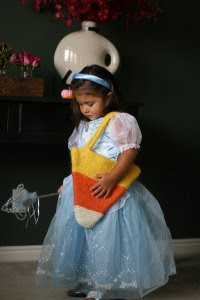
My favorite of all, a Candy Corn bag. [Yes, I’ve added it to my queue…]

This charming young lady is modeling a knitted and felted bag.

And more on the candy corn theme: HATS!

by Sarah Nopper (a free Ravelry Download)

But, many more caught my eye...

Gruesome knitted eyeballs

What would Halloween be without skulls and ghosts?


And of course, funny things for your head?


A knitted Elvis wig, anybody?

Funky hats

Very clever and intricate “bokaclavas” after Bok,
a demon from “Doctor Who.”


Bats, too, of course...

[For some reason, she makes me think of a young woman I once saw on a subway dressed as a bunch of grapes…lots of purple balloons…]

…even one on a dishcloth…


And, lots of pumpkins!

Another dishcloth by blackrayne:


A bag for your treats:


Felted style, off the vine...


One of the children noticed that with their new triplets, this family had exactly the right number for Snow White and the Seven Dwarves!


This is just a hint of all the creative juices flowing out there! Great fun to see what people come up with!

Happy Halloween, one and all!

Diane Gerlach, AKA The Yin-Yang Knitter, is a regular contributor to Fiber Focus. An avid charity knitter who keeps both Afghan children and our military warm with her hats, mittens and socks, Diane is passionate about the world and all the stories it holds. She was a Peace Corps Volunteer in Micronesia in the 1970's and continues to have ties there through her adopted daughter. Diane is also a member of our Fiber Focus group on Ning.

The photo shows her with some of my monsters when she was here in Paducah. She took care of my babies while I was out of town and went through a minor but scary earthquake that shook them all up!


Share/Bookmark

Tuesday, May 20, 2008

Not Only Men Who Knit, But Men Who Knit Lace

by Diane Gerlach
the Yin Yang Knitter

Contemporary male knitters abound, well, at least are becoming more common. The first male knitter I knew of was Kaffe Fassett, famous for his fabulous colorwork in the decorative arts.

Other than Kaffe, it was not common to hear of men knitters in the late 20th Century. Rosie Greer embroidering? [All Pro defensive lineman, Los Angeles Rams, 1960’s and 70’s] Yes, but knitting…no.


In World War II Britain, it was expected that everyone, schoolchildren and adults alike, would “Knit for Britain." When World War I was waging, the American Red Cross provided yarn and instructions to knitters all over the US, to encourage them to knit gloves, hats, vests, socks, etc, for the men in the military. It is not known how many men on the home front were knitters.


"War, War, War, Warm, Warm" by Rayela Art
Reverse painting on glass collage


During the American Civil War, there was a huge effort to produce knitted goods for soldiers on both sides of the conflict; there is documentation that boys and men were involved in this effort.

Not so surprising when one considers that the first French knitting guilds in the 1300’s were male organizations, and it is likely that knitting came to Europe as it was spread from port to port by Arabic sailors.


In many communities in the Andes, men are the knitters.


Lauren Weinhold explains her photo, “This gentleman is knitting a hat by the side of the road. I had heard that needles are often recycled bicycle spokes, sharpened to a fine point, and this picture seems to confirm it. Also, his technique is quite different from European circular knitting - he is actually purling every row in the round, working from the outside of the loop, not the inside. This is supposed to be "easier" for the integrated colorwork. It is also a tradition that the working yarn is looped around the neck - it is here, although hard to see. (The end ball is in the small bag near his foot on the ground).“


In Men Who Knit and the Dogs Who Love Them,


Annie Modesitt and Drew Emborsky include short bios of 16 male knitters, one of whom learned to knit as a child from his grandmother and another who learned from his wife as a way of spending more time with her. Selected pages are available here.


But men who knit lace, now that’s special. A personal favorite is Jared at Brooklyn Tweed who scaled up a vintage knitted doily pattern


into this jaw-dropping Hemlock Ring Blanket in a lovely manly shade of gray.


He also knit Elizabeth Zimmerman’s Pi Shawl as a blanket,


which became so large it presented a blocking problem. (Photos courtesy of Jared)


Montse Stanley’s book, Knitter's Handbook : A Comprehensive Guide to the Principles and Techniques of Handknitting has an illustration of a wonderful pair of Spanish 19th century knitted stockings with inscriptions ‘Jacinta Cabanes’ knitted into one sock and ‘Recuerdo de Vicente’ on the other, recording a gift from a man to a woman.


Were they knitted by Vicente himself? On needles finer than anything readily available today?


Kenny, The Boy Who Knits produces lace shawls


scarves,


and lace socks. (Photos courtesy of Kenny)


A lovely Spiral Counterpane was knit by Ricke Scott:


He is a member of Men Who Knit, an online community where you can buy Real Men Knit, the DVD.


In The Dining Room at 209 Main, a restaurant in the central Wisconsin small town of Monticello, a display features the exquisite work of Gene Beugler:


Yknit offers a podcast by WonderMike and Stephen hizKNITS, who describe themselves as "two needle junkies who happen to be men". Episode 5, "Lace in Your Face" interviews Nino Esposito


and Ted Myatt, the Knitter Guy.


Who would have predicted it, all these men who knit? And, men’s knitting retreats are popping up from Australia to Albany, NY. Steve reports in his blog, Famous Steve Knits, that there were six male knitters at the Atlanta Knitter’s Guild’s recent retreat, an all-time high. EZ would be so proud!


[Elizabeth Zimmerman affectionately known among knitters as EZ, revolutionized modern knitting with innovative techniques and patterns in her books and in her knitting series shown on American Public Television. In 1974, she founded Knitting Camp, which continues today under the direction of her daughter.]


Amazing work. Good job, all of you guy knitters, and thank you for the eye candy!


____________________________________

Note from Rachel:
I made a series of reverse painting on glass collage pieces recently. I had found an article on men knitting during World War II and used the images in the collaged pieces. These were inspired by Diane's charity knitting and are available for sale on Etsy. Click on the images for the link.


Share/Bookmark

LinkWithin

Related Posts with Thumbnails